No More Excuses!

Incorporating Media Literacy into the Classroom

For a number of years, the conversation on media literacy and incorporating multimedia into the classroom has continued. Over time, yes, we have made some advances in implementation. However, there are number of instances and settings where individuals (educators) are working against it. I had a conversation with a teacher today who stated, “I think technology should be banned from school. We need to go back to only using print material.” Well, the image above describes my exact mood after hearing that. It is impossible for us to not include technology in the classroom and we all have to learn to embrace that. Choosing to not incorporate technology into the classroom is choosing to not meet our students where they are or create a learning environment that is more engaging for them. This is not okay. We have to be willing to engage students in ways in which they enjoy and the incorporation of multimedia is one of those ways.

“We need technology in every classroom and in every student and teacher’s hand, because it is the pen and paper of our time, and it is the lens through which we experience much of our world.”

David Warlick

One of the main reasons educators do not include multimedia into their classroom is because they don’t see the value in it or seek out ways for implementation. In the article, “12 Basic Ways to Integrate Media Literacy and Critical Thinking Into Any Classroom”, Scheibe and Rogow share different methods to consider when seeking to integrate media literacy into the classroom. Of the 12 reasons shared, I consider using media as a standard pedagogical tool as one of the most integral points raised. Educators (not all) often make excuses about incorporating technology into their lessons. If more educators were more intentional about getting into the routine of creating lessons and instruction that involved technology, the habit will continue. Scheibe and Rogow informs us that we can, “use media as a standard pedagogical tool by using diverse media, especially in cases where image-based media can convey information more richly and effectively than would be possible with a standard classroom discussion, demonstration, or traditional print text (e.g., a demonstration of mathematics concepts involving motion or dimension, an example of how news media presented an historical event or speech, an electronic “field trip” to an otherwise inaccessible place)” (Scheibe & Rogow, n.d.). In other words, every time we seek to include multiple forms of media, we are sure to engage our students in new ways. During my field experiences in a fourth grade classroom, I intentionally sought after opportunities to utilize media for instruction outside of print. Sometimes it was as simple as adding in a video, while other times it involved me sculpting an entire lesson where students had to utilize technology to research answers and complete more complex projects. Might it take an extra five minutes? Sure! Are our students worth the extra five minutes? Yes, and will always be! Here are some clips from the students’ perspectives.

“Classrooms don’t need tech geeks who can teach; we need teaching geeks who can use tech.”

David Geurin

What’s the bottom line?

Of course there are a number of educators who are intentionally and effectively implementing media literacy into their classrooms. This post is to charge educators who are not incorporating multimedia into their lessons to do so. We can’t deny that technology is here to help us. Excuses for implementation will no longer work. Knowing that not all educators are not making excuses for implementation, what are other reasons educators may not incorporate multimedia or media literacy into their classroom?

References

Confused Person #1478140. (n.d.). Retrieved March 6, 2019, from http://clipart-library.com/clipart/zcX5yqAgi.htm

Scheibe, C., & Rogow, F. (n.d.). 12 Ways to Integrate Media Literacy and Critical Thinking into Any Curriculum. Retrieved from Project Look Sharp: http://www.ithaca.edu/looksharp/12BasicWays.pdf

[Talks, TEDx]. (2016, March 28). Redefining Learning & Teaching Using Technology. | Jason Brown | TEDxNorwichED [Video File]. Retrieved from http://www.youtube.com/watch?v=AOTEQVYDPpg.

[Talks, TEDx]. (2015, April 2). Technology in the classroom | Ethan Dickens | TEDxPascoCountySchoolsED [Video File]. Retrieved from https://www.youtube.com/watch?v=gya4V_grs_o&t=1s
Let’s Teach more than Math!

“Emotional Intelligence begins to develop in the earliest years. All the small exchanges children have with their parents, teachers, and with each other carry emotional messages.” Daniel Goleman

For so long, the education system has done a good job of teaching our students reading, writing, mathematics, social studies, and science. Thousands of text books with multiple editions all assist in our efforts to prepare our students academically. We can produce the best doctors; however, can we produce doctors who are well aware of their emotions and can show empathy towards others? We, as in the entire education system, have abandoned intentional social emotional learning instruction and the benefits it provides our students.

What is social emotional learning?

CASEL, The Collaborative for Academic, Social and Emotional Learning, defines social emotional learning as, “the process through which children and adults understand and manage emotions, set and achieve positive goals, feel and show empathy for others, establish and maintain positive relationships, and make responsible decisions” (“What is SEL?,” n.d.). Incorporating social emotional learning into the classroom is sure to benefit students and society holistically. You may be wondering, if the benefits are so good why aren’t people going bananas? I am still wondering the same exact thing. Of course there are components to consider, such as who actually teaches the course, how do we intertwine it with current curriculum, how much instructional time should be dedicated towards social and emotional learning, etc. All of these components seems to be worth working through when considering the data provided below:

  1. “According to a 2011 meta-analysis of 213 studies involving more than 270,000 students, those who participated in evidence-based SEL programs showed an 11 percentile-point gain in academic achievement compared to students who did not participate in SEL programs” (“SEL Impact,” n.d.).
  2. “Compared to students who did not participate in SEL programs, students participating in SEL programs also showed improved classroom behavior, an increased ability to manage stress and depression, and better attitudes about themselves, others, and school” (“SEL Impact,” n.d.).
  3. “A 2015 national study published in the American Journal of Public Health found statistically significant associations between SEL skills in kindergarten and key outcomes for young adults years later in education, employment, criminal activity, substance use, and mental health” (“SEL Impact,” n.d.).

Feel free to check out more information on The Collaborative for Academic, Social and Emotional Learning by clicking here.

As you can see, social and emotional learning definitely has some benefits that assists in our efforts to serve our students holistically. I am currently learning the importance of meeting students where they are in my digital and media literacy course, and social and emotional learning (SEL) is a stride towards that. Our students deserve social and emotional learning. Why? Because every time we choose to include SEL instruction, we choose to better serve our students and prepare them for a better future. As I conclude this post, I now need your help. Why are people not cuckoo for Cocoa Puffs over social emotional learning? Why isn’t there a push for more intentional social emotional learning instruction given its benefits?

References

Children, C. F. (2016, August 01). Retrieved February 02, 2019, from https://www.youtube.com/watch?v=ikehX9o1JbI

SEL Impact. (n.d.). Retrieved from https://casel.org/what-is-sel/

What is SEL? (n.d.). Retrieved from https://casel.org/what-is-sel/

Whose Responsibility is it to Teach Digital and Media Literacy?

“Have you seen that post on Facebook?” “Have you seen what happened on Capitol Hill today through your CNN app?” “Is that book for class available on Kindle?”

There are so many ways for us to access, receive and dish out information in today’s society and it can be done in seconds. Literally. Many people have questioned if that should be considered a positive or negative thing. Through that questioning, many people have adapted this negative connotation to digital media. We all have that one family member who complains about Facebook, yet has never actually used it. This same trend has entered our education system and we have a number of educators who are not in favor of incorporating digital media into their classrooms. This is not to call out educators (not fully). There are a number of individuals regardless of age, profession, or background that has a negative perception of digital media and its use.

The question then becomes, with so many negative perceptions of digital media, whose role is it to teach digital and media literacy? I believe that it is the responsibility of everyone to teach digital and media literacy. Digital media is not only at school, so it can’t be the sole responsibility of teachers. Digital media is also not only outside of school, so it can’t be the sole responsibility of parents and community members. It takes everyone because the reality is that digital media is everywhere. Our students are living in a digital age and can’t necessarily escape that reality. Acknowledging that reality, I believe it is vital to seek out the positive associations with digital media within the world of our students:

  1. Digital and media literacy increases student motivation.

How? Students are more likely to engage with material that they find interesting and entertaining. The same way someone of an older generation may prefer to read the actual newspaper through print, someone of a younger generation may prefer to view the news through the CNN app.

  1. Digital and media literacy increases literacy skills and comprehension.

How? Students that are more motivated and interested will engage with the material more, therefore improving their ability and willingness to read.

As much as I advocate and favor the use of digital media, the ease of access often leads to students relying on sources and information that is not credible. Just as I can use this platform to publish my opinions around education, it could have been used to spread lies and rumors. Our students have access to all of that material and could find themselves citing or referencing false information or “fake news”. To prevent that, it takes everyone to instill digital and media literacy skills into our students with explanation. Instead of telling students to not use the material, we must all assist in explaining why a source may not be credible. Teaching students to analyze digital media for credibility is much less work than constantly trying to force students to not utilize material that is literally always at their fingertips. Teaching digital and media literacy skills does not have to be hard and I have included some resources below to prove that. The answer is not shying away from digital media. The solution is to teach our students to become active users of digital media who are knowledgeable and aware.

I would conclude with asking you to challenge yourself. Think where do you come into play and how can you do your part in educating our students on the proper usage of sources. In fact, I would offer you another challenge. What are ways that you can ensure that you yourself are using more credible sources? Are you fact checking a Facebook post before sharing it? Are you retweeting your local news station tweet without considering their biases and stances on certain issues? We all have part in this process, as both learners and teachers.

Digital and Media Literacy Education

4 Ways to Integrate Media Literacy in the Classroom Article

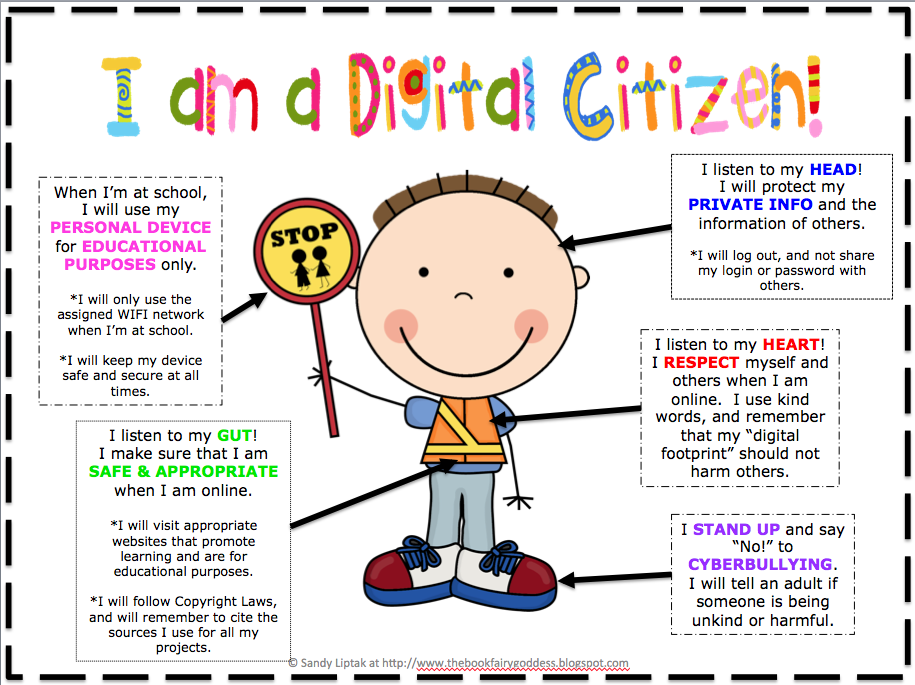
i-am-a-digital-citizen-poster